


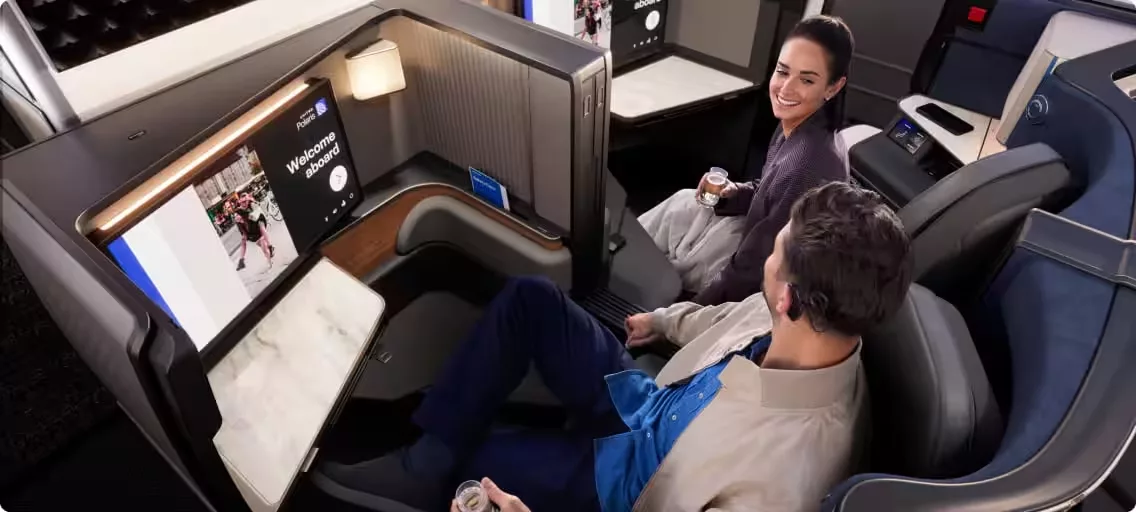
When booking international flights, the choice between coach and business class can significantly impact your travel experience. Understanding the key differences helps you make informed decisions about whether the upgrade justifies the additional cost for your specific journey.
Coach class flights: the basics of economy travel
Coach class, also known as economy, remains the most accessible way to fly. Airlines design these cabins to maximize passenger capacity, which means tighter seating arrangements and more streamlined service. For budget-conscious travelers or those taking shorter travel, coach provides reliable transportation without premium amenities.
The airport experience in coach typically involves standard check-in counters where you’ll join regular queues alongside most passengers. Security screening follows the standard process, and boarding happens in numbered groups after premium cabin passengers have settled in. While some airlines offer self-service kiosks to speed up the check-in process, anyone with checked baggage still needs to visit an agent.
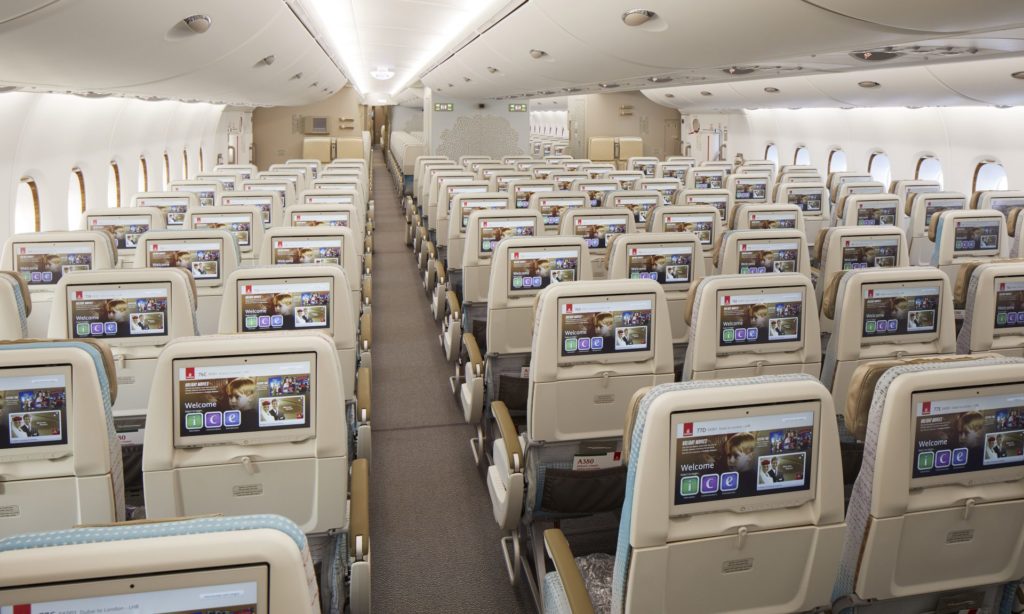
source: https://www.emirates.com/us/english/experience/our-fleet/a350/
Seat comfort in coach focuses on functionality rather than luxury. Standard economy seats offer 17-18 inches of width with pitch (the distance between rows) ranging from 30-32 inches on most carriers. The seats recline modestly, usually around 3-4 inches, which provides some relief but rarely enough for comfortable sleeping on overnight travel. Personal space remains limited, with minimal room to stretch out or work comfortably on a laptop.
Coach passengers receive basic in-flight entertainment through seatback screens or personal device streaming on most international flights. Meals are served on longer routes, typically consisting of one or two options presented on a tray. Complimentary beverages include water, soft drinks, coffee, and tea, while alcoholic beverages may require an additional fee depending on the airline and route.
Baggage allowances for coach passengers generally include one carry-on luggage item plus a personal item like a purse or laptop bag. Checked baggage typically costs extra on domestic routes, though international flights often include one or two checked bags in the ticket price. Weight limits are strictly enforced, and exceeding them results in additional fees.
Business class flights: comfort, privacy, and personalized travel
Business class transforms flying into a premium experience designed for travelers who prioritize comfort and productivity. The cabin features significantly fewer seats, creating a more spacious and tranquil environment throughout the travel.
From the moment you arrive at the airport, business class passengers enjoy expedited service. Dedicated check-in counters mean shorter wait times, and priority security lanes help you move through the airport efficiently. Many major hubs offer exclusive lounges where you can relax, work, or enjoy complimentary food and beverages before your travel. Airport lounges provide quiet spaces with comfortable seating, business centers, shower facilities, and premium dining options.
The seating difference between business and coach is dramatic, especially on international flights. Business class seats are substantially wider, typically measuring 20-22 inches, and feature significantly more legroom with pitch ranging from 38-78 inches depending on the configuration. On long-haul international flights, most carriers now offer lie-flat seats that recline to a complete 180-degree position, essentially transforming into a bed. This feature alone changes the entire experience of overnight travel, allowing passengers to arrive refreshed rather than exhausted.
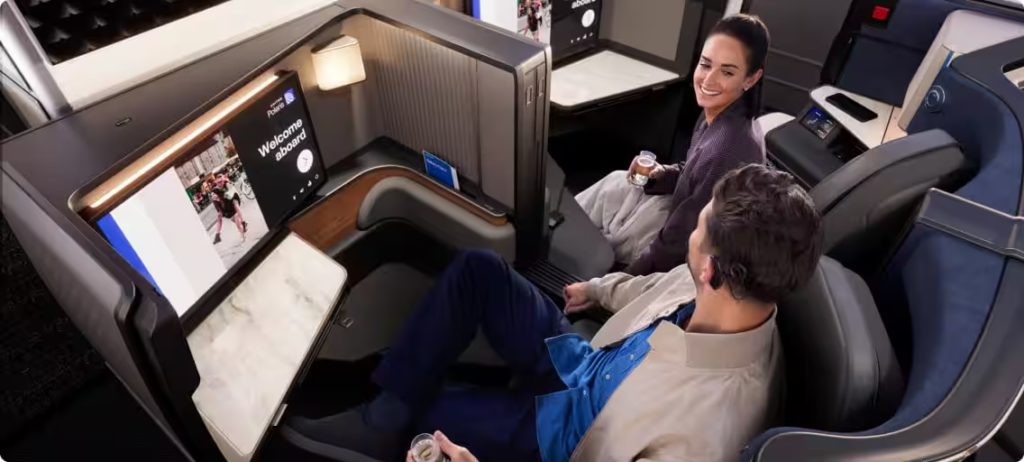
source: https://www.united.com/en/us/fly/travel/inflight/united-polaris.html
Privacy features vary by airline and aircraft, with some offering individual suites with closing doors while others provide privacy dividers between seats. Direct aisle access from most seats means you won’t need to climb over sleeping passengers during the flight. The extra space allows you to spread out work materials, use your laptop comfortably, or simply relax without feeling cramped.
Service in business class is considerably more attentive and personalized travel. Flight attendants maintain lower passenger-to-crew ratios, enabling them to provide individualized attention throughout the journey. Multi-course meals replace the standard tray service, with options often developed by renowned chefs. Wine pairings, premium spirits, and champagne complement the enhanced menu. Meals are served on actual china with metal cutlery rather than plastic, and you can typically request meals at your preferred timing rather than following a rigid schedule.
Amenity kits feature products from luxury brands, including skincare items, dental care, and sometimes even pajamas on ultra-long flights. In-flight entertainment systems offer larger personal screens with extensive libraries of movies, TV shows, music, and games. Noise-canceling headphones ensure you can enjoy entertainment or work in peace.
Business class passengers receive generous baggage allowances, typically including two or three checked bags with higher weight limits than coach. Priority baggage handling means your luggage appears first on the carousel upon arrival, saving valuable time.
Compare business class vs coach
Comfort and Space
The physical comfort difference is substantial. Business class seats provide 2-3 times more personal space than coach, with lie-flat seats on long-haul international flights offering the ability to sleep horizontally. Coach seats recline minimally and keep passengers in an upright or semi-reclined position throughout the flight, which can be challenging on overnight routes lasting 8-14 hours.
Service and Amenities
Business class delivers personalized travel with attentive crew service, multi-course meals, premium beverages, and luxury amenity kits. Coach offers standardized meal service with limited options and basic amenities. The quality difference extends to every aspect, from the quality of meals to the attention from flight attendants.
Baggage Allowance
Business class passengers enjoy significantly higher baggage limits, often allowing 2-3 checked bags weighing up to 70 pounds each, plus generous carry-on luggage allowances. Coach passengers typically receive lower limits, with one checked bag (sometimes for an additional fee on certain routes) weighing up to 50 pounds and standard carry-on allowances.
Airport lounges
Lounge access represents a major perk of business class travel. These exclusive spaces offer comfortable seating, work areas, showers, premium food and beverages, and a peaceful environment away from crowded terminals. Coach passengers generally cannot access these lounges unless they hold airline status or specific credit cards.
Price Point
Business class fares typically cost 4-10 times more than coach tickets on the same route. A transatlantic economy ticket might cost $500-800, while business class on the identical flight could run $3,000-6,000. The gap widens on popular routes and during peak travel seasons. However, smart travelers can find better meal deals through:
- Points and miles redemptions: Frequent flyer programs often offer significant value when redeeming miles for business class rather than purchasing tickets outright
- Consolidator websites: Specialized travel sites secure unpublished fares that can reduce business class costs by 30-70%
- Upgrade bids: Some airlines allow economy passengers to bid for available business class seats at departure
- Off-peak booking: Flying during low-demand periods (January-March, late October-early December) typically yields better business class pricing
- Advance planning: Booking several months ahead often reveals better premium cabin availability and pricing
Why business class is worth It
For many travelers, business class justifies its premium pricing on international flights exceeding 6-8 hours. The ability to sleep comfortably transforms red-eye flights from ordeals into restful journeys. Arriving refreshed and ready to engage rather than exhausted and jet-lagged provides real value, especially for business travelers attending important meetings or travelers wanting to maximize vacation time.
The productivity benefits matter for business travelers who can work efficiently with ample space and minimal distractions. The expedited airport experience saves time on both ends of the journey. For special occasions, anniversaries, or milestone trips, the enhanced experience creates memorable moments worth the investment.
However, business class isn’t always necessary. On shorter flights under 5 hours, the benefits diminish since meals may be lighter and sleeping becomes less critical. Budget-conscious travelers often prefer saving money for destination experiences rather than the flight itself. Overnight trains or connecting flights with layovers can make coach more tolerable by breaking up long journeys.
The decision ultimately depends on your priorities, budget, flight duration, and personal preferences. Understanding these differences helps you choose the option that best matches your travel needs and financial situation.

